
How to Pick the Right Dial Size for a First Copy Watch (Beginner-Friendly Guide 2026)
Introduction
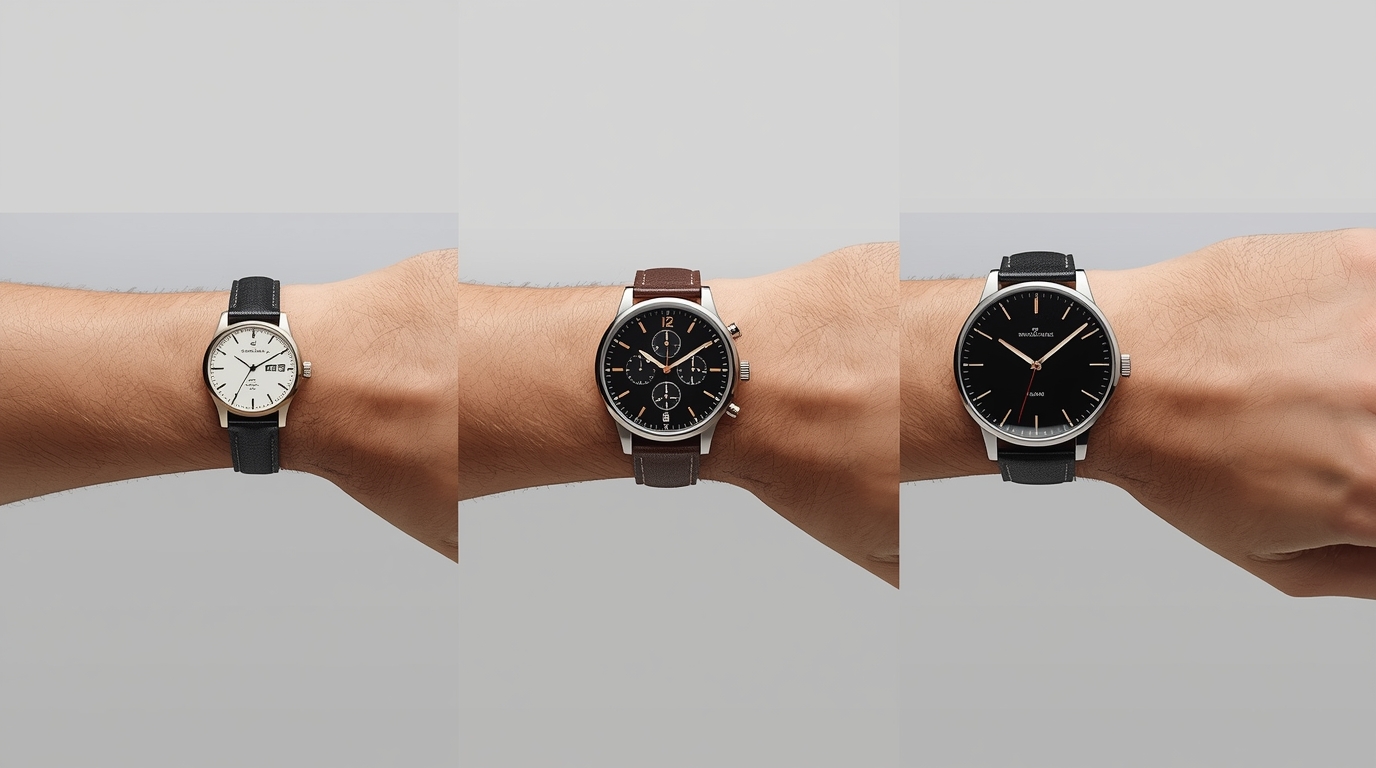
“Why does this watch look perfect on him but awkward on me?”
If you’ve ever asked yourself this, dial size is the reason.
When buying a first copy watch, most people obsess over brand names like Rolex, Omega, Fossil but they ignore the one factor that decides how good it actually looks on your wrist: dial size. Too big? It screams fake. Too small? It feels outdated.
In this beginner-friendly guide, I’ll break down how to pick the right dial size for a first copy watch, based on wrist size, lifestyle, and watch type so you never regret your purchase.
Why Dial Size Matters in First Copy Watches
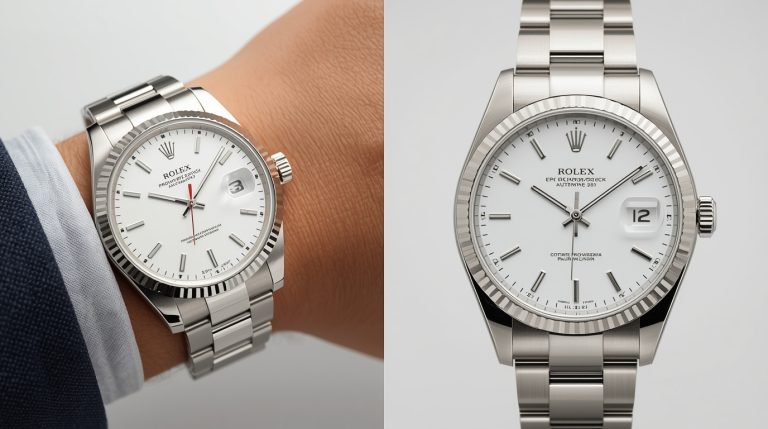
The first time I ordered a first copy watch online, I didn’t even look at the dial size and it was a Big mistake. When it arrived, something felt off immediately, even before I compared it to the original photos. The watch looked flashy, sure, but the dial was just a little too big, and that tiny difference ruined the whole realism.
Dial size matters more than people think because it controls proportions. On luxury watches, brands obsess over millimeters. A 40mm dial vs a sloppy 43mm replica changes how the bezel, markers, and date window line up. I’ve noticed low-quality replicas often mess this up. The numerals feel crowded, the sub-dials are oddly placed, and the watch screams “replica” to anyone who knows watches, even casually.
Incorrect dial size is usually the first shortcut factories take. It’s cheaper to reuse molds, so you’ll see the same oversized dial slapped onto different models. I’ve had one where the logo placement was slightly too high, and yeah, it was noticed. That kind of detail exposure is painful, especially when you thought you scored a deal.
There’s also the comfort angle, which I learned the hard way. Bigger dials look great in Instagram photos but feel awkward after six hours of daily wear. My wrist started feeling fatigued, and the watch kept knocking into desks. For occasional wear, oversized dials can be fine, but for daily use, balance wins every time.
Confidence plays into this too. When a dial fits your wrist properly, you stop thinking about the watch and just wear it. When it doesn’t, you keep adjusting it, hiding it, second-guessing yourself. That’s not the vibe.
If you’re still unsure how to judge dial size while buying, the mindset matters more than specs. I break that down in How to Choose a First Copy Luxury Watch, which helps connect these small details to smarter buying decisions overall.
Standard Dial Sizes Explained (In Simple Terms)
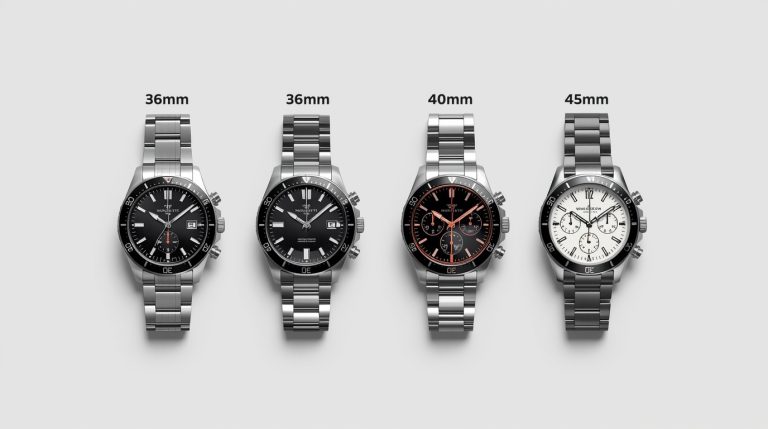
When I first started buying first copy watches, dial size numbers meant absolutely nothing to me. 36mm, 40mm, 44mm… it all sounded the same. I figured bigger meant better, which is funny now because that thinking cost me both money and confidence. Only after wearing different sizes for months did it finally click.
Small dials, usually around 36–38mm, have this quiet, classic charm. I own a 38mm Datejust first copy, and it surprised me how “luxury” it felt on the wrist. These sizes work great if you like a vintage look or have slimmer/smaller wrists. They also sit flatter, which makes them easier to wear daily without drawing weird attention.
Medium dials, roughly 39–41mm, are the sweet spot for most people. I recommend this range almost by default because it balances comfort, and versatility. You can wear a 40mm watch with jeans, office wear, or even traditional outfits and it won’t feel out of place. Most watches models live in this range for a reason.
Large dials, around 42–44mm, are where things get tricky. They look bold and sporty, especially with chronographs or diver-style watches. I like them for occasional wear, but after a full workday, they start to feel heavy and slightly annoying, if I’m being honest.
Extra-large dials, anything above 45mm, should usually be avoided. I bought one once just to test it, and it felt like wearing a wall clock. Unless you have a very large wrist or want pure fashion impact, these sizes hurt realism and comfort fast.
How to Measure Your Wrist Correctly at Home
I’ll be honest, the first time I measured my wrist, I did it wrong. I wrapped the tape too tight, wrote down the number, and ordered a first copy watch that felt like it was choking my hand. That one mistake taught me that wrist measurement isn’t about precision obsession, it’s about realism and comfort.
The easiest way is using a soft measuring tape, the kind used for tailoring. Wrap it around your wrist just below the wrist bone, where a watch normally sits. Don’t pull it tight. It should touch the skin but still move a little. If you don’t have a tape, the string method works fine. Wrap a string around your wrist, mark the overlap, then measure it against a ruler. Simple, and it gets the job done.
Now, wrist circumference matters more than people think. Under 6.25 inches (around 16cm) is considered a small wrist, 6.25–7 inches is medium, and anything above 7 inches falls into large. Most Indian buyers I’ve interacted with, including myself, sit in the 6.5 to 6.9 inch range. That’s why 39–41mm dials usually feel “just right” for daily wear here.
One mistake I see constantly is measuring above the wrist bone. That gives you a bigger number and leads to oversized watches. Another common error is measuring at night when your wrist is slightly swollen, yeah that’s a thing. Some people even measure their forearm by accident, which explains those massive dial choices.
Take your time with this step. A correct wrist measurement saves you from bad dial size choices and regret purchases later. It’s boring, but it works.
Ideal Dial Size Based on Wrist Size

I used to think dial diameter was everything. If the listing said 40mm, I’d relax and click buy. Turns out, that was lazy thinking, and yeah, it backfired more than once. A couple watches looked fine on paper but wore huge on my wrist, and I couldn’t figure out why at first.
Over time, I started mentally using a simple dial size chart. If your wrist is under 6.5 inches, stick to 36–38mm. Between 6.5 and 7 inches, 39–41mm usually feels balanced. Anything over 7 inches can comfortably handle 42–44mm without looking awkward. It’s not a rule carved in stone, but it saves you from most mistakes people make when buying first copy watches.
Slim wrists and thick wrists react very differently to the same dial. On a slim wrist, even a 41mm watch can look loud and clumsy. On an average wrist, that same size feels normal, even boring sometimes. Thicker wrists need more presence, but that doesn’t mean going oversized, it means better proportions.
Here’s the part nobody told me early on: lug-to-lug matters more than dial diameter. I once owned a 39mm watch with long lugs that wore like a 43mm. If the lugs hang over your wrist, the watch will never look premium, no matter how good the logo or weight is.
Strap width and thickness also change everything. Thick straps make watches feel bigger and heavier, while thin straps can make even a 42mm dial wearable. This is where fit connects directly to quality. High-end replicas get these proportions right, and low-end ones don’t. I go deeper into this fit-and-finishing link in How to Identify High-Quality First Copy Watches, because once you see it, you can’t unsee it.
Dial Size by Watch Type (Very Important)
This part took me years to understand, mostly because I kept blaming my wrist instead of the watch type. Two watches can both say 41mm on the listing, yet one looks clean and classy while the other feels like a dinner plate. That’s when I realized dial size behaves differently depending on the watch style.
Chronograph watches almost always look bigger. Extra sub-dials, thicker bezels, and busy layouts create visual bulk. I once bought a 42mm chronograph that wore larger than a 44mm simple three-hand watch I owned. More going on inside the dial means your eye reads it as larger, even if the numbers say otherwise.
Automatic watches bring thickness into the picture. Many first copy automatics are thicker than the originals, sometimes by 1–2mm. That extra height makes the watch sit taller and feel heavier, especially under a shirt cuff. I’ve returned one purely because it kept snagging my sleeve, which was annoying daily.
Dress watches and sports watches live in different worlds. A 38mm dress watch looks elegant and intentional. A 38mm sports watch, though, can feel small and underpowered. Sports watches are designed to look tough, with wider bezels and chunky cases, so they need a bit more size to balance it out.
Skeleton dials are tricky because they mess with perception. Open dials create a visual size illusion, making the watch appear larger and louder than it really is. I’ve learned to size down when choosing skeleton styles.
Dial Size Differences in Popular First Copy Brands
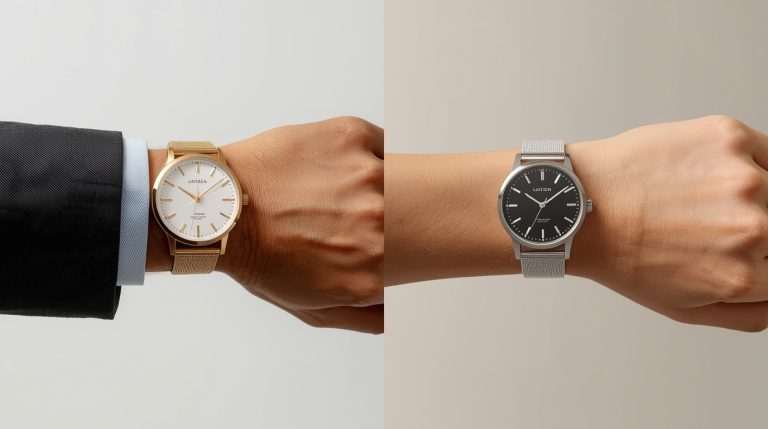
I didn’t really respect brand dial proportions until I put two first copy watches side by side, both “Swiss made,” both similar price. One looked believable. The other looked like a toy. Same wrist, same lighting, totally different vibe. That’s when brand-specific dial sizing finally made sense to me.
With Rolex first copies, proportions are sacred. The Submariner sits around 40–41mm but wears compact because of its bezel and tight lug design. Datejust models at 36mm or 41mm are all about balance, especially marker spacing and date window placement. Daytona chronographs, even at 40mm, look smaller than expected because the dial is dense. When replicas mess this up, especially by stretching the dial, it’s obvious.
Omega first copy watches play a different game. Speedmaster chronographs feel wider because of thin bezels and open dials, even at 42mm. Seamaster designs balance size better with thicker bezels and wave dials, but proportions still matter a lot. I’ve noticed lower-quality Omega copies often get the dial-to-bezel ratio wrong, making the watch look flat. The better breakdowns in Omega First Copy Watches helped me spot these issues faster.
Then there’s Fossil and other fashion-brand first copies, which love oversized designs. 44mm to 46mm dials are common, thick cases, wide straps, very loud presence. They’re meant to be noticed, not necessarily to look realistic. If that’s your style, fine, but it’s a totally different goal. The sizing logic behind this is explained well in Fossil First Copy Watches.
At the end of the day, copying original proportions matters more than copying logos. When the dial size matches the brand’s design language, the watch feels right. When it doesn’t, no amount of shine can save it.
Common Dial Size Mistakes to Avoid
I’ve made almost every dial size mistake you can think of, mostly chasing the wrong reasons. Early on, I thought a bigger watch meant more status. If it looked loud, it must look expensive, right? Yeah… no. Oversized dials usually do the opposite and make a first copy watch easier to spot.
Buying big for “status” is the most common trap. A 44mm watch on an average wrist doesn’t say confidence, it says uncertainty. I’ve noticed people keep adjusting oversized watches, pulling sleeves over them, hiding them. That’s not power. A properly sized 40mm that sits cleanly does way more for your presence.
Case thickness is another detail people ignore. I once bought a 41mm watch that felt bulkier than a 43mm I owned, purely because it was thick. Thickness affects how the watch balances, how it slides under cuffs, and how heavy it feels after hours. Many low-quality replicas mess this up, and you feel it instantly.
Choosing fashion over wrist proportion is risky. Trends change fast. Those massive dials that look cool online can feel silly in real life, especially after the novelty wears off. I’ve learned to ask one question now: would I still wear this quietly, every day? If not, it’s probably the wrong size.
Copying influencer wrist sizes blindly is another mistake. Most influencers have larger wrists, camera angles, or custom sizing. What looks perfect on them may look awkward on you. Real sizing comes from your wrist, not someone else’s feed.
✅ Conclusion
I wish someone had drilled this into my head when I bought my first few first copy watches. Dial size isn’t a “nice to have” detail. It’s the foundation. When the size is right, everything else just clicks into place without you forcing it.
A perfectly sized first copy watch doesn’t scream for attention. It feels natural on the wrist, sits comfortably for hours, and quietly looks authentic. You stop adjusting it. You stop second-guessing it. That confidence boost is real, even if people don’t talk about it much. When a watch fits properly, you wear it like it belongs there.
I’ve learned that shortcuts don’t work here. Measuring your wrist properly matters. Understanding brand proportions matters. Matching the dial size to how you actually live your life, office days, casual weekends, or special occasions, matters more than chasing trends. Bigger isn’t better. Louder isn’t richer. Correct is correct.
Once you get this right, something interesting happens. You stop feeling the urge to “upgrade” every few months. The watch doesn’t feel temporary anymore. It becomes part of your routine, and that’s when a first copy truly does its job.
If you’re planning your next buy, slow down just a little. Measure your wrist, think about proportions, and choose the dial size intentionally. Do it right once, and you’ll save money, frustration, and a lot of regret.
👉 Explore our curated first copy watches designed for perfect fit and realism, and start with sizing done right.