
The Ultimate Guide to First Copy Watches in India (2026 Edition)

Introduction
A few years ago, I came across a stat that said demand for affordable luxury watches in India had jumped by over 30%, and honestly, that didn’t surprise me at all. I’ve seen buyers waste money simply because they didn’t understand what first copy watches actually mean here. In the Indian market, “first copy” isn’t the same as original, and it’s definitely not the same as those cheap duplicates that stop working in six months, but most people lump them together. That confusion leads to bad choices, overpaying, or worse, trusting the wrong sellers. I’ve watched friends get excited by low prices, only to feel disappointed when the watch arrived and felt wrong in hand. This guide exists to fix that. I’m breaking down everything in one place, from how first copy watches really work in India to pricing, availability, and the trust issues nobody talks about openly, so you can buy smart instead of guessing.
“Why does this watch look perfect on him but awkward on me?”
If you’ve ever asked yourself this, dial size is the reason.
When buying a first copy watch, most people obsess over brand names like Rolex, Omega, Fossil but they ignore the one factor that decides how good it actually looks on your wrist: dial size. Too big? It screams fake. Too small? It feels outdated.
In this beginner-friendly guide, I’ll break down how to pick the right dial size for a first copy watch, based on wrist size, lifestyle, and watch type so you never regret your purchase.
What Are First Copy Watches?
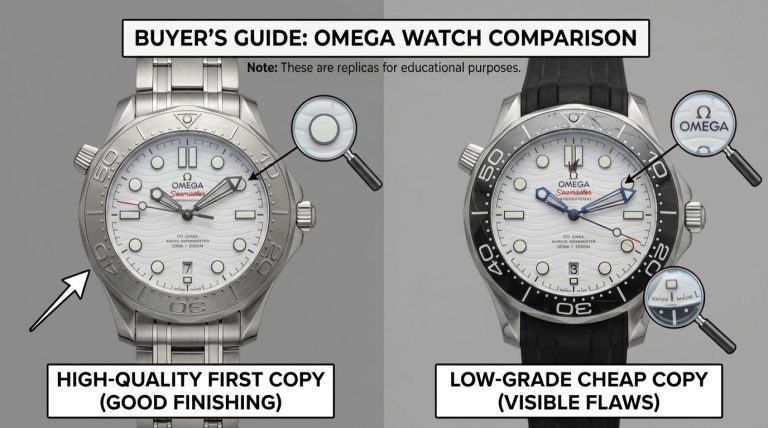
When I first heard the term first copy watches, I thought it was just a fancy way to say fake. That assumption alone almost made me walk away from some genuinely decent pieces. In simple terms, first copy watches are high-quality replicas designed to closely match the look and feel of original luxury watches, without the original price tag attached.
They’re very different from originals, obviously. Originals use in-house movements, precious metals, and strict quality control. But they’re also miles apart from low-grade copies. Cheap duplicates use light alloys, sloppy printing, weak straps, and movements that barely last a year. First copy watches usually use stainless steel cases, decent Japanese or automatic movements, solid straps, and much better finishing. The dial alignment, logo placement, and bezel proportions are where the difference really shows.
What surprised me early on was how visually accurate some first copies are. From arm’s length, even watch enthusiasts struggle to spot them. The weight feels right, the glass doesn’t look cloudy, and the clasp doesn’t rattle like a toy. Are they perfect? No. But for the price, the value is hard to ignore.
That’s exactly why they’re popular in India. Original luxury watches can cost more than a small car, while first copies sit in a range that feels reachable. Add limited showroom access, online availability, and rising fashion awareness, and the demand makes sense.
There are myths too. Some people think first copy means illegal junk, others believe they’re identical to originals. Both are wrong. Understanding where they sit in between saves you money, frustration, and unrealistic expectations.
Why First Copy Watches Are Popular in India
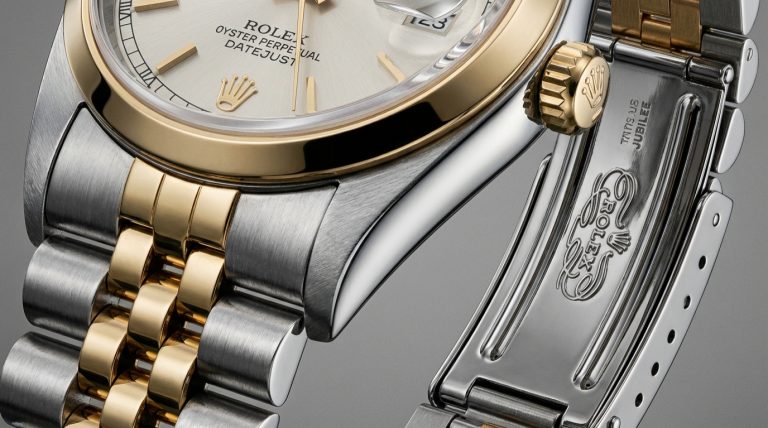
I’ve watched the popularity of first copy watches grow slowly, then all at once. The biggest reason is simple, luxury aspiration versus affordability. A lot of people love the look of a Rolex or Omega, but dropping several lakhs on a watch just isn’t practical. First copy watches sit in that middle space where you can enjoy the design and presence without wrecking your budget, and that matters a lot in India.
Social media pushed this even further. Instagram, reels, fashion YouTube channels, everyone’s flashing clean watches with everyday outfits. I’ve noticed people don’t want the brand for status alone anymore, they want the look. When trends change fast, spending huge money on one watch feels risky, so first copies become the safer experiment.
There’s also a clear daily wear vs occasion wear mindset. Many buyers want something comfortable for office use that looks premium but isn’t stressful to wear daily. Others buy bolder pieces only for weddings, parties, or festivals. I’ve seen people own two first copy watches for different situations rather than one expensive original they’re afraid to scratch.
Urban demand is obvious, but tier-2 cities are where growth is exploding. Better online access, rising income, and exposure to global fashion trends changed buying behavior. I’ve spoken to sellers who say tier-2 buyers research more and ask smarter questions, which surprised me.
Typically, buyers range from young professionals to businessmen and even older buyers who just like good design. It’s less about age now and more about practical style choices.
Types of First Copy Watches Available in India
When I first started browsing first copy watches in India, I didn’t realize how many types existed. I thought it was just one category with different designs slapped on. That misunderstanding cost me one impulse buy that looked great online but didn’t suit how I actually wear watches day to day. Once I slowed down and understood the types, choices became way easier.
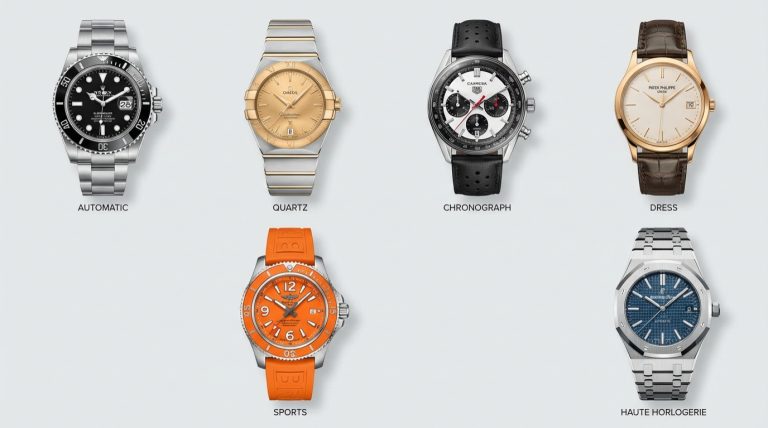
The biggest split you’ll see is automatic vs quartz first copy watches. Automatic first copies attract people who love the mechanical feel, the sweeping seconds hand, the weight. I bought one early on and loved the vibe, but yeah, they’re thicker and need care. Quartz first copies are simpler, lighter, more accurate, and honestly better for daily wear if you don’t want maintenance stress. I explain this trade-off properly in Automatic vs Quartz First Copy Watches, because it matters more than people admit.
Style-wise, the market is packed. You’ll find chronograph first copies that look sporty and bold, dress watches with clean dials for office wear, rugged sports watches inspired by divers, and full-on luxury styles meant to mimic high-end brands. I learned that chronographs wear bigger, while dress watches feel smaller even at the same size.
There’s also a clear men’s vs women’s split now. Men’s first copy watches focus on size and presence, while women’s designs are catching up fast, offering both classic slim dials and modern oversized looks. That wasn’t always the case.
Casual vs premium-looking first copies is another real difference. Casual ones are lighter, trend-driven, good for everyday use. Premium-looking first copies focus on finishing, weight, and realism, the kind you wear when you want that polished look. For practical picks, Best First Copy Watches for Daily Use helped me avoid buying watches that only look good once.
Quick highlights to remember:
- Automatic = mechanical feel, more thickness, more care
- Quartz = low maintenance, better accuracy, daily-friendly
- Chronograph watches look larger on wrist
- Dress watches suit office and formal wear
- Sports styles feel bolder and heavier
- Men’s and women’s sizing logic is different
- Casual copies are trend-based, premium ones focus on realism
Best First Copy Watch Brands in India
When people ask me which first copy watch brand is “best” in India, I always pause. There isn’t a single winner, and I learned that after chasing brand names instead of understanding how each brand’s design translates into a replica. Some brands just copy better than others, and that’s the honest truth.
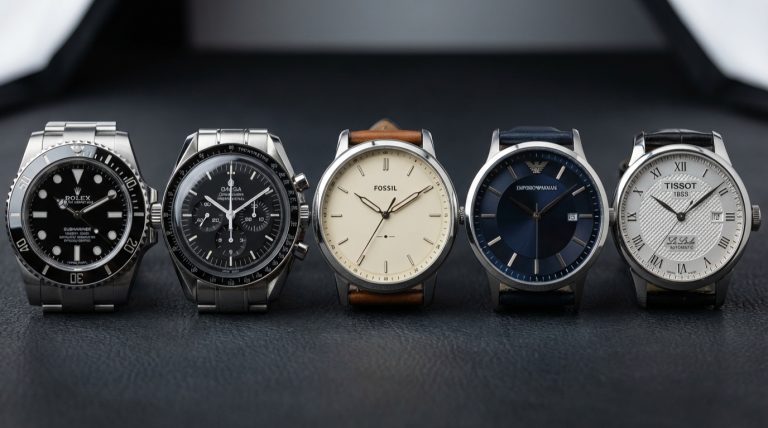
Rolex first copy watches are popular because their designs are clean and proportion-driven. Models like the Datejust or Submariner rely on balance more than flashy details, which makes them easier to replicate convincingly. I’ve seen well-made Rolex first copies that look believable even up close, as long as the dial size and finishing are right. This is why many buyers start their research with the Rolex First Copy Watches Guide.
Omega first copy watches lean more technical. Speedmaster and Seamaster styles have busy dials, thin bezels, and specific proportions. When done right, they look stunning. When done poorly, they look flat and oversized. I’ve noticed Omega copies demand more attention to detail, which is why quality varies so much. The breakdown in the Omega First Copy Watches Guide helped me understand what to look for beyond just the logo.
Fossil first copy watches play a different role. They’re fashion-driven, often larger, trend-focused, and meant to stand out. Realism isn’t the main goal here, style is. If you like bold designs and don’t care about perfect replication, Fossil copies make sense.
Brands like Armani, Tissot, and Casio also show up often. Armani and Tissot copies aim for clean, modern looks, while Casio pieces focus on functionality and nostalgia. In terms of realism, Rolex and Omega usually win because their originals are better documented and more widely copied.
How to Identify a High-Quality First Copy Watch
I learned this lesson after getting burned once. The watch looked amazing in photos, price felt fair, and I thought I’d cracked the system. When it arrived, though, something felt off right away. That experience forced me to slow down and learn how to actually identify a high-quality first copy watch instead of trusting marketing words.
The first thing I check now is dial finishing and font alignment. On good first copies, the text is sharp, evenly spaced, and centered. On bad ones, fonts look thick, letters float slightly, or the logo sits just a bit too high. Those tiny details matter more than shine.
Next is case weight and materials. A quality first copy usually uses stainless steel and feels solid in hand. If it feels too light, it probably is. I once owned a copy that looked premium but felt hollow after a week of wear, and that illusion faded fast.
Bracelet quality and clasp feel tell you a lot. Smooth edges, tight links, and a clasp that closes with a clean click are signs of effort. Rattling bracelets or sharp edges are red flags. You notice this most during daily wear.
For movement smoothness, don’t expect miracles, but you should expect consistency. Quartz should tick cleanly, automatics should sweep smoothly without jerks. Jerky seconds hands usually mean cheap internals.
Finally, packaging. High-quality first copies come in decent boxes, not luxury-grade, but not flimsy either. If you want a deeper checklist, How to Choose First Copy Watches breaks this down further. And please watch out for seller tricks covered in Common First Copy Watch Scams in India, because good marketing doesn’t always mean good quality.
First Copy Watch Prices in India (What’s Fair?)
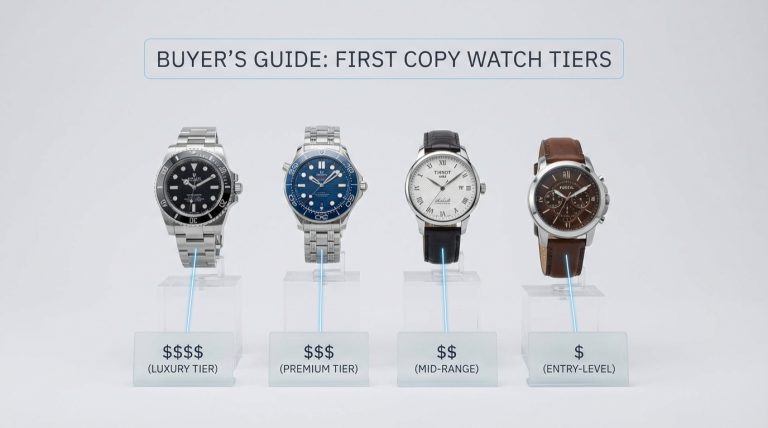
When I first dipped my toes into the world of first copy watches in India, I had zero clue what a fair price even looked like. I remember seeing listings from ₹800 all the way to ₹8,000 and thinking, “man, they all look shiny—so what’s the real difference?” Turns out, price carries a lot of meaning here, and knowing what’s fair can save you cash and regret.
In India, typical price ranges for first copy watches usually fall between ₹1,200 and ₹5,000 for most decent pieces. Under ₹1,000 is usually too cheap—materials are flimsy, finishing is lazy, and those watches often die within months. Around ₹3,000–₹5,000 you start seeing much better stainless steel, clearer dial printing, and more reliable movements. I explain this more in First Copy Watch Price Guide India, because once you see the patterns, it gets easier.
Prices vary so much because quality varies. Some sellers push basic quartz movements, thin cases, low-grade bracelets and call it a deal. Others use heavier stainless steel, more accurate movements, and better finishing, which ups the cost. Import costs, seller margins, and even brand inspiration (Rolex vs fashion brands) influence pricing too.
Now, cheap copies vs value-first copies is where most newbies trip up. Cheap copies might look ok in photos, but they show flaws once you hold them. Value-first copies aren’t perfect, but they feel solid, sit right on the wrist, and last longer—especially if you wear them often.
And no, higher price isn’t always better on its own. I’ve seen ₹4,500 watches that feel cheap and ₹2,800 pieces that outperform them. Price is a clue, not a guarantee.
Is It Legal to Buy First Copy Watches in India?
This question made me uncomfortable at first, mostly because nobody gives a straight answer. I remember Googling it late one night after placing an order, wondering if I’d messed up. The truth is, buying first copy watches in India sits in a legal grey area, and it’s not as dramatic as people make it sound.
In simple terms, buying a first copy watch for personal use is rarely targeted. There’s no law that knocks on a buyer’s door for owning one watch. The real legal heat is around manufacturing, importing in bulk, and reselling replicas as originals. That’s where trademark infringement kicks in. I didn’t fully understand this difference early on, and that confusion causes a lot of unnecessary fear.
From a buyer’s perspective, what matters is intent and behavior. Don’t try to pass a first copy as an original. Don’t resell it claiming it’s genuine. And definitely don’t get involved in bulk trading or “dealer” activity unless you know exactly what you’re doing. That’s where people cross lines without realizing it.
What buyers should avoid is misleading branding and false claims. If a seller says “100% original” at a replica price, walk away. That’s not just shady, it puts you in a messy situation if disputes happen. I’ve learned to stick with sellers who are clear about what they’re offering, even if the wording is indirect.
Practically speaking, the risk for individual buyers is low when you buy discreetly, understand what you’re purchasing, and keep expectations realistic. No drama, no shortcuts, no pretending. If you want the full breakdown with examples, Is It Legal to Buy First Copy Watches in India? explains this grey area without fear tactics or legal jargon.
Where to Buy First Copy Watches in India Safely
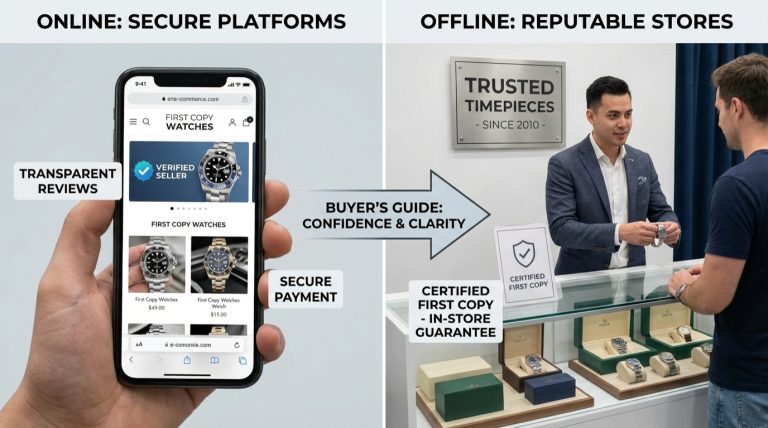
This section exists because I learned the hard way that where you buy matters just as much as what you buy. I’ve picked up first copy watches from offline markets and random Instagram sellers before, and yeah, some were fine, but many weren’t. Offline shops let you see the watch, but prices are often inflated and once you walk out, there’s no return, no discussion. Online buying is convenient, but only if the platform is transparent.
The biggest red flags are vague listings and pressure tactics. If a seller avoids sharing real photos, rushes you with “limited stock,” or can’t answer basic questions about movement or size, that’s a warning. I’ve received watches that looked nothing like the photos because the images were copied from somewhere else. That frustration stays with you.
This is why clear product images are non-negotiable for me now. Real photos, multiple angles, close-ups of the dial, clasp, side profile, even wrist shots, they show honesty. When a store is confident enough to show details, including small imperfections, it usually means the product is legit for its category.
Then comes COD, returns, and transparency. Cash on delivery, basic return policies, and clear descriptions aren’t extras, they’re trust signals. I don’t mind paying a fair price if I know there’s accountability. If everything feels hidden, I move on.
That’s exactly why curated stores matter. Instead of listing every copy under the sun, curated platforms focus on realistic proportions, proper finishing, and watches that actually make sense for daily wear. Since this article is published on WatchTown, it’s worth saying this plainly: the goal here is to remove guesswork for Indian buyers by filtering out low-grade junk and offering only first copy watches that meet clear standards for fit, realism, and value. WatchTown operates with Cash on Delivery, live product dispatch updates, and a return policy, because trust matters more than flashy listings.
Buying safely isn’t about luck. It’s about choosing platforms that prioritize transparency, buyer protection, and long-term trust, not just quick transactions.
Common Mistakes Buyers Make (And How to Avoid Them)
This section exists because I’ve seen smart buyers make the same mistakes again and again, and honestly, I’ve made most of them myself. The biggest one is falling for fancy terms like “original copy” or “store quality.” Those words sound reassuring, but they don’t actually mean anything specific. If a seller can’t clearly say whether a watch is original, first copy, or replica, that confusion is already a red flag.
One myth that refuses to die is this idea that certain brands like Fossil, TAG Heuer, Hugo Boss, Citizen, or Seiko are “manufactured in China,” so you can somehow get an original or near-original from the grey market. I’ve watched the videos, read the comparisons, and talked to sellers, and the truth is… there’s no solid evidence. Yes, some brands assemble parts in different countries, but that does not mean originals are floating around cheaply. Most of these claims are sales talk mixed with half-truths. If it sounds too good to be true, it usually is.
Another mistake is choosing style over comfort. I’ve bought watches that looked amazing in photos but felt heavy, awkward, or irritating after a few hours. A watch you don’t enjoy wearing ends up forgotten, no matter how good it looks. Fit always beats hype.
Ignoring after-sales support is also risky. People focus so much on price that they forget returns, exchanges, or basic help matter. When something goes wrong, silence from the seller hurts more than losing a little money.
And finally, buying from unverified sellers. Random Instagram pages, WhatsApp-only dealers, no address, no policies, I’ve been there. Sometimes you get lucky. Often, you don’t. The fix is simple: slow down, question claims, and buy from platforms that value clarity and accountability. Mistakes happen, but most of these are avoidable once you know what to watch for.
✅ Conclusion
If there’s one thing I’ve learned after seeing so many buyers go through trial and error, it’s this: first copy watches make sense in India when they’re chosen smartly. They give you access to luxury design, solid everyday wear, and confidence on the wrist without the pressure of spending a fortune. That balance is exactly why their demand keeps growing.
The real win isn’t buying cheap. It’s buying right. Knowing your wrist size, understanding proportions, avoiding myths, and choosing trusted sellers does more for your satisfaction than chasing the lowest price ever will. I’ve watched people regret rushed purchases, and I’ve also seen how calm and confident a buyer feels when the watch simply fits and works as expected.
An informed decision changes everything. You stop guessing. You stop upgrading endlessly. You start wearing your watch instead of worrying about it. That’s the difference between impulse buying and intentional buying, and it shows in how often the watch actually leaves the drawer.
If you’re at the stage where you want to explore options without confusion, curated collections help narrow things down. Platforms like WatchTown are built around that idea, filtering out low-grade pieces and focusing on fit, realism, and value, with COD, clear listings, and buyer transparency baked in.
Choose with clarity, not pressure. When you do, a first copy watch stops being a compromise and starts feeling like a confident, well-made choice.